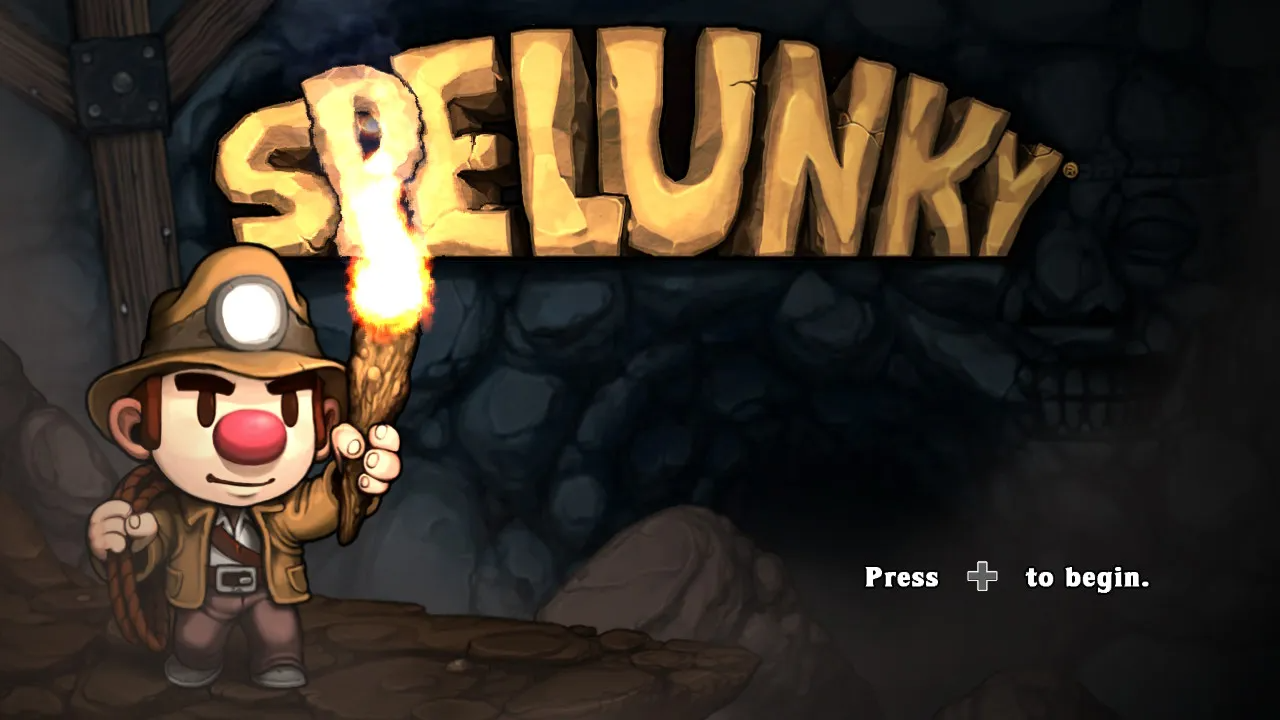
Derek Yu’s Spelunky is, without a doubt, an all time indie classic. From its humble origins on PC in 2008, it exploded onto the indie scene as an xbox live arcade title, back when indie gaming felt new and exciting. Underneath its cartoony graphics and cheery music lay a brutal beast of a game, one that wasn’t afraid to grind you to dust with death after death. Despite this - or because of this - Spelunky was a wild hit, even if the number of players who actually played it through to completion was shockingly low.
There is a lot about Spelunky that feels weirdly unique, even to this day. Instantaneous death is always lurking, no matter how strong your character becomes with the ludicrously strong equipment you can find in its depths. There are essentially no RPG systems to speak of, with all progression tied to shortcuts, and most importantly, player skill. And there is an entire can of worms of secrets and secret endings for only the most dedicated hardcore players.
But for all this, is Spelunky still worth playing all these years later? Instant death sounds like a good way to elevate tension, but is it a cheap way to do so? And does the lack of meaningful progression make it feel repetitive and boring as you tackle the same levels and enemies over and over again?
Direct Download | iTunes | Spotify
On this episode, we discuss:
Playstyle
Mastering Spelunky requires a delicate mixture of three elements - player knowledge, being able to develop and execute a plan, and the mechanical wherewithal to execute that plan. Which of these is the most important, and is it possible to neglect one and still succeed?
Level Design
Spelunky uses randomly generated levels and enemy placements that still conform to some macro logic, like using some predefined templates and allowing a single continuous path from the entrance of a level to the exit. Does this hit a good balance of randomness that allows for dynamic encounters that feel unique, or does it slide into something a bit too repetitive?
Risk v Reward
Danger is ever present in Spelunky, with a run-ending mistake only being moments away. Does this design end up pushing players into a far more conservative and boring playstyle, or is there enough reward to playing aggressively that you get to engage in fun platforming and combat for good reason?
We answer these questions and many more on the 142nd episode of the Retro Spectives Podcast!
Intro Music: KieLoBot - Tanzen K
Outro Music: Rockit Maxx - One point to another
Spelunky OST: Erik Suhrke
Is Spelunky 2 just as good as the first game? What other games exist that have carried the spiritual torch of the original? Is this game just secretly an immersive sim? Come let us know what you think on our Community Discord Server!
You can support the show monetarily on our Buy me a Coffee Page!
